Linux Traffic Control: qdisc, QoS and IP Bonding
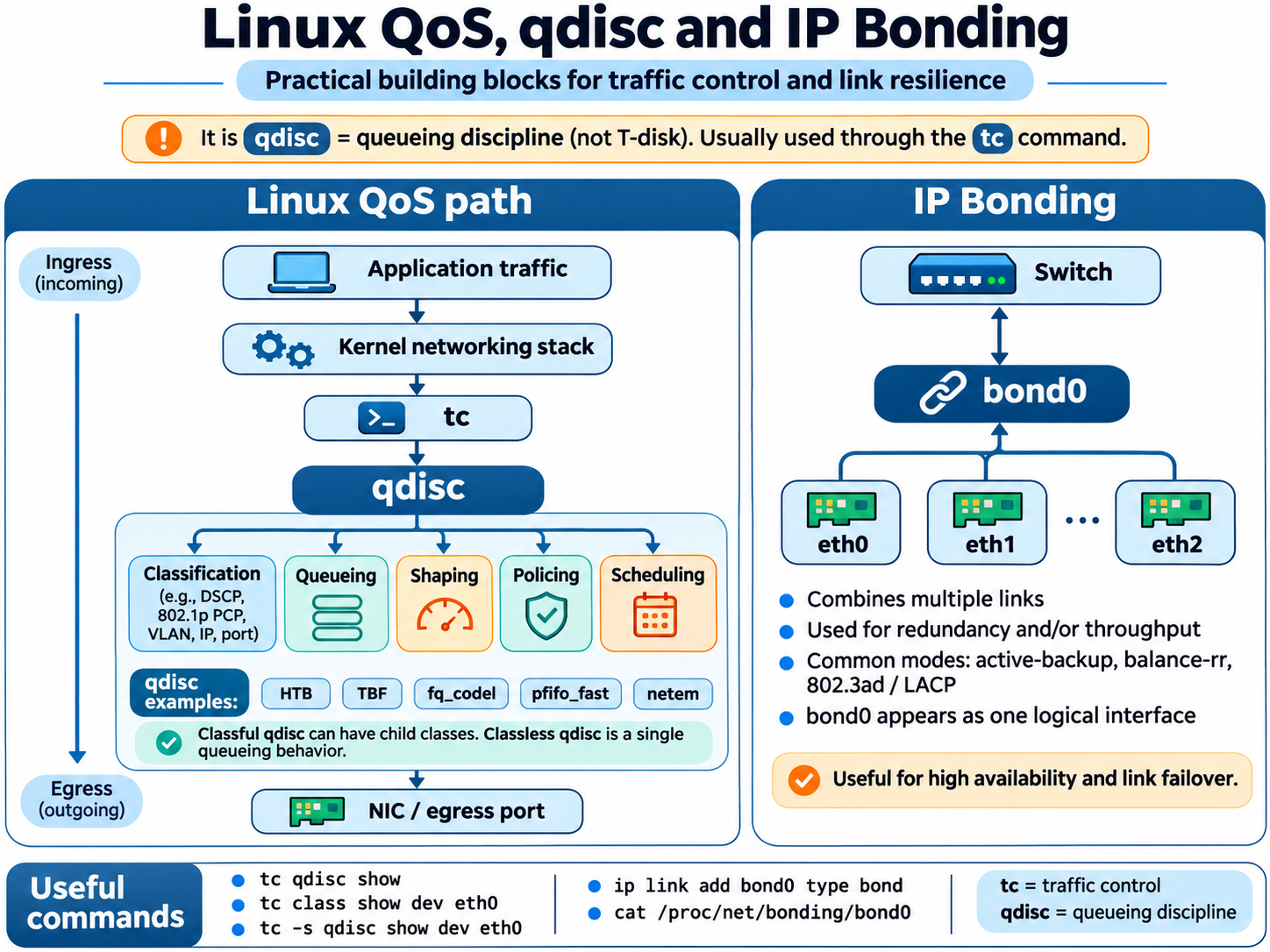
The term is qdisc, short for queueing discipline, not T-disk. The Linux tc (traffic control) command configures queueing, scheduling, shaping and filtering. The diagram is a conceptual overview: tc is a configuration utility, not a per-packet processing stage. Packets traverse kernel networking and the configured qdisc on the relevant path.
QoS building blocks
- Classification selects traffic based on fields such as DSCP, IP address, port or VLAN priority.
- Queueing/scheduling determines which packets are transmitted first.
- Shaping delays packets to enforce an output rate; policing drops or remarks traffic exceeding policy.
- Common qdiscs include HTB (hierarchical shaping), TBF (token bucket),
fq_codel(flow queueing/active queue management), andnetem(network impairment simulation).pfifo_fastis a historical default on some systems, not a universal current default.
tc qdisc show
tc -s qdisc show dev eth0
tc class show dev eth0
IP bonding
Linux bonding creates a logical interface, commonly bond0, from physical links such as eth0 and eth1. active-backup provides failover; 802.3ad uses LACP when the switch is correctly configured; other modes offer different balancing semantics. A single flow generally does not gain the sum of all link speeds under LACP hashing.
ip link add bond0 type bond
cat /proc/net/bonding/bond0
The ip link add command only creates the logical bond; slaves, mode, IP configuration and switch-side settings must still be configured. On modern Linux, NetworkManager or systemd-networkd is often used to persist bonding configuration.